
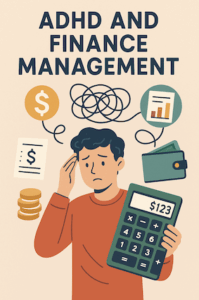
 Have you ever heard of the “ADHD tax”? It’s the invisible—and sometimes very real—cost that many people with attention deficit hyperactivity disorder (ADHD) pay due to their symptoms: late fees, impulsive purchases, unused subscriptions, lost valuables, and more. And it’s not just about money: this “tax” is also paid in stress, guilt, and sometimes, self-esteem.
What the Research Says:
- A study led by Chi Liao, a finance professor at the University of Manitoba, reveals that even moderate ADHD symptoms in childhood increase the risk of financial difficulties in adulthood (unpaid bills, lack of emergency savings, reliance on high-interest loans).
- Adults with ADHD earn on average 37% less per month by age 30 than their peers, and their retirement savings can be 40% to 64% lower, largely due to irregular savings (Investopedia, 2025).
- The “ADHD tax” isn’t limited to financial losses; it also includes emotional impact (ADDitude Magazine, 2024).
Strategies Adapted for the ADHD Brain:
- Automate as much as possible
- Bill payments, transfers to a savings account, retirement contributions.
- Automation reduces the risk of forgetting and the fees associated with being late.
- Automate as much as possible
- Make your finances visible
- Use a budgeting app with visual graphs or dashboards.
- Do a quick weekly check-in (10 minutes) to track your spending.
- Make your finances visible
- Create a “firewall” against impulsive purchases
- Implement a 24-hour delay before any unplanned purchase over a certain amount.
- Remove your credit card information from online shopping sites to avoid “one-click” purchases.
- Create a “firewall” against impulsive purchases
- Simplify your accounts
- The fewer accounts and cards you have, the easier it is to stay in control.
- Choose a single main card with spending alerts activated.
- Simplify your accounts
- Add visual and auditory reminders
- Phone notifications for due dates.
- Post-it notes or whiteboards for important financial reminders.
- Add visual and auditory reminders
Useful Resources:
- Investopedia – The Financial Challenges of ADHD — And How To Overcome Them (2025)
- ADDitude Magazine – The ADHD Tax: How Money Slips Away When You Have ADHD
- Stephanie Moulton Sarkis – ADD and Your Money: A Guide to Personal Finance for Adults with Attention Deficit Disorder
- Verywell Mind – The Financial Toll of Living with ADHD
Conclusion:
ADHD profoundly influences how we manage money, but with strategies tailored to your brain’s functioning, it’s possible to reduce—or even eliminate—this “ADHD tax.” Tip: Start small. Automate one payment this week, then add a weekly check-in. Every small action counts. And you? What strategies do you use to better manage your finances with ADHD? Share your experiences in the comments; they can inspire others.

