To better Understand and Adapt
Many women living with ADHD notice that their symptoms vary depending on the phases of their menstrual cycle. These fluctuations are not random: they are directly linked to hormones, which influence dopamine, a key neurotransmitter in regulating attention, motivation, and emotions.
The effects of the cycle on ADHD
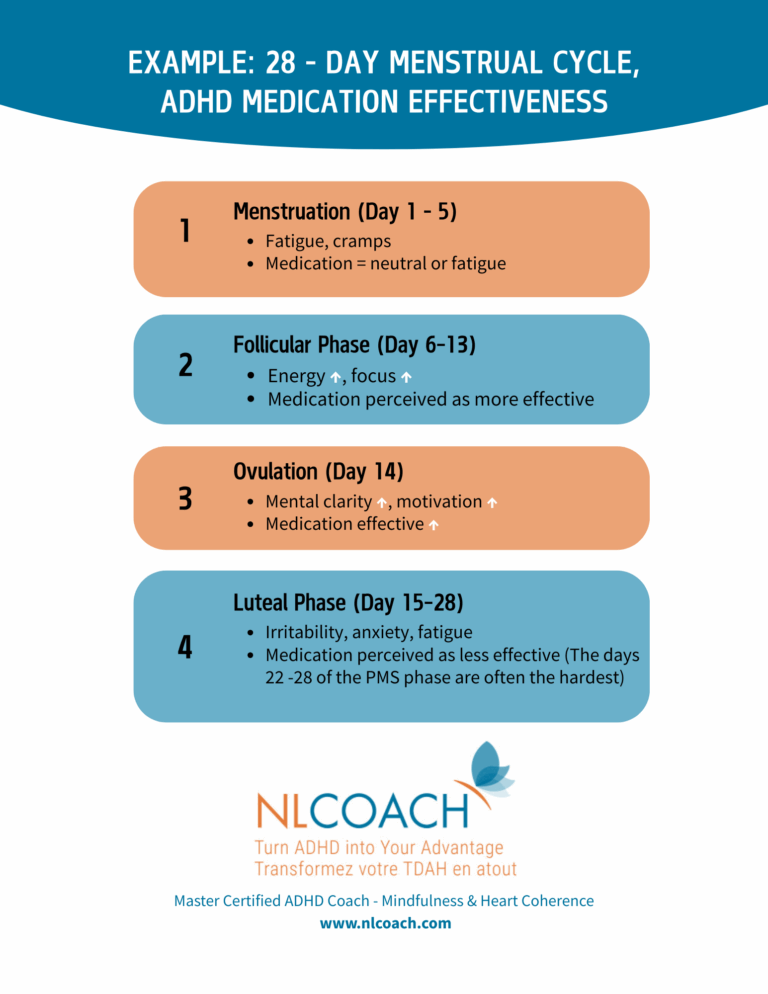
Follicular phase (after menstruation, before ovulation): Estrogen levels rise, supporting dopamine. Result: more energy, better focus, and the impression that medication works better.
Ovulation: This is the peak of estrogen. Mental clarity and motivation are boosted, but some women also notice stronger impulsivity.
Luteal phase (after ovulation, before menstruation): Estrogen drops while progesterone rises, reducing dopamine. ADHD symptoms intensify: more inattention, fatigue, anxiety, and irritability. Medication may seem less effective.
Premenstrual period (PMS): Often the hardest phase: drop in productivity, difficulty regulating emotions, and the feeling that medication “stops working.”
How to better cope with these fluctuations
- Track your cycle: note each month the most challenging days to identify your personal “pattern.”
- Adapt your schedule: plan creative or demanding projects during the follicular and ovulatory phases, allow more rest the week before menstruation.
- Use simple reminders: alarms, timers, visual lists, especially helpful in the luteal phase.
Medication: possible adjustments (with your doctor)
Some women notice that their treatment seems less effective in the luteal phase. This is not a personal failure, but a physiological mechanism linked to dopamine. With a healthcare professional, it is possible to explore:
- a temporary dosage adjustment.
- a change of molecule or formulation (extended release vs. immediate release).
Keeping a journal of symptoms and medication can greatly help the doctor suggest adapted solutions.
Complementary support strategies
- Sleep: keep regularity, especially in the premenstrual period.
- Nutrition: focus on protein and fiber, limit fast sugars.
- Movement: yoga, walking, stretching to ease anxiety and stabilize mood.
- Mindfulness & Heart Coherence: powerful tools to regulate emotions when medication seems less effective.
Key points to remember
- Dopamine is the main lever impacted by hormones and plays a central role in ADHD.
- Symptom fluctuations linked to the cycle are physiological, not a lack of willpower.
- Anticipation + tracking = more clarity, productivity, and serenity.
And what if you didn’t have to handle this alone?
Living with ADHD and hormonal cycles influencing medication can feel discouraging. Yet, it is possible to turn this reality into a path of understanding and balance.
As a Master Certified ADHD Coach, Mindfulness Teacher, and HeartMath Mentor, I support women to:
- better understand their brain and hormonal functioning,
- integrate strategies adapted to their daily life,
- use concrete tools of mindfulness and emotional regulation,
- transform challenges into strengths, within a holistic and compassionate approach.
■ I invite you to book a free discovery session to explore how my coaching can help you live your ADHD with more clarity, confidence, and serenity.
■ Visit www.nlcoach.com