Why anticipation motivates less — and what to do?
 In a nutshell.
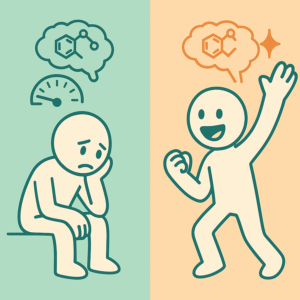
For neurotypical brains, dopamine starts rising just by anticipating a reward. For many people with ADHD, that anticipatory boost is weaker: dopamine shows up mainly during the task… or right after. Result: getting started feels hard.
Many studies suggest that, in ADHD, needing to act to feel the dopamine “reward” can increase vulnerability to addictive behaviors (seeking fast rewards).
What to do (simple + practical)
- Start tiny: 2 minutes on a micro-task (open the document, write one sentence).
- Immediate reward: a small “bonus” right after the action (tea break, 5-minutes scroll). Not later—now.
- Make progress visible: checkboxes, strike-throughs, a timer, Pomodoro time management technique.
- Body-doubling: work with a partner or virtual coworking to lower friction.
- Boost interest: add novelty, meaning, emotion (who/what does this matter for?).
- Prime your body: 2–3 minutes of movement or coherent breathing before you start.
- Limit choice: one priority, one next action.
Key idea
Don’t rely on anticipation to motivate you. Create small action triggers and near-term rewards to “switch on” dopamine at the right moment.
What helps you get moving when motivation is low?

