 Why Self-Regulation Sits at the Heart of ADHD
ADHD is often described through visible challenges such as attention, time management, or organization. Yet beneath these daily struggles lies a more central mechanism: self-regulation. This is the ability to steer and adjust attention, emotions, energy, and actions in line with what matters in the moment.
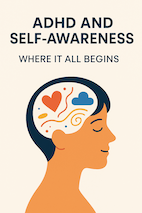
Self-regulation relies on a key skill that can be inconsistent for many adults with ADHD: self-awareness. It is the capacity to notice what is happening inside—physical sensations, emotional signals, fatigue, rising impulsivity, and mental overload—before the system tips into shutdown or overwhelm.
Many clinicians and researchers have framed ADHD primarily as a self-regulation and executive-function challenge rather than a simple attention deficit. This perspective helps explain a common paradox. When a person with ADHD is deeply interested or stimulated, they may focus for long periods with impressive intensity. At other times, starting an important task can feel nearly impossible. The issue is not attention itself, but the ability to regulate it.
In daily life, this may look like late awareness of tiredness, hunger, or irritability; difficulty naming emotions as they rise; impulsive reactions that take the wheel before reflection has a chance to engage; or harsh self-criticism when one realizes—too late—that limits were exceeded.
The good news is that self-awareness can be strengthened. Even small, realistic practices can create meaningful leverage. The goal is not perfection or rigid control but reducing the delay between an internal signal and a chosen response. That space is where clarity, freedom, and a kinder relationship with oneself emerge.
Consider simple ADHD-friendly practices: micro-pauses of 20 to 60 seconds throughout the day; checking three body signals (breath, jaw, shoulders); gentle external cues (alarms, sticky notes, notifications); a quick voice memo after an emotional moment; or a brief grounding question: “What is happening in me right now? What do I need to keep going with more calm?”
Some people also benefit from short mindfulness or heart-coherence techniques to stabilize the nervous system and regain a sense of internal steadiness when cognitive load is high. The most effective tools are often brief, concrete, and easy to integrate without stepping away from real life.
Key takeaway: building self-awareness opens the door to stronger self-regulation. And stronger self-regulation makes it possible to move forward with greater clarity, confidence, and self-compassion—gradually turning ADHD challenges into personalized advantages.
If you recognize yourself in these patterns and want structured, practical, and human support, ADHD coaching can help you identify your internal signals, design strategies aligned with your unique brain wiring and build sustainable self-regulation habits.

